Discover
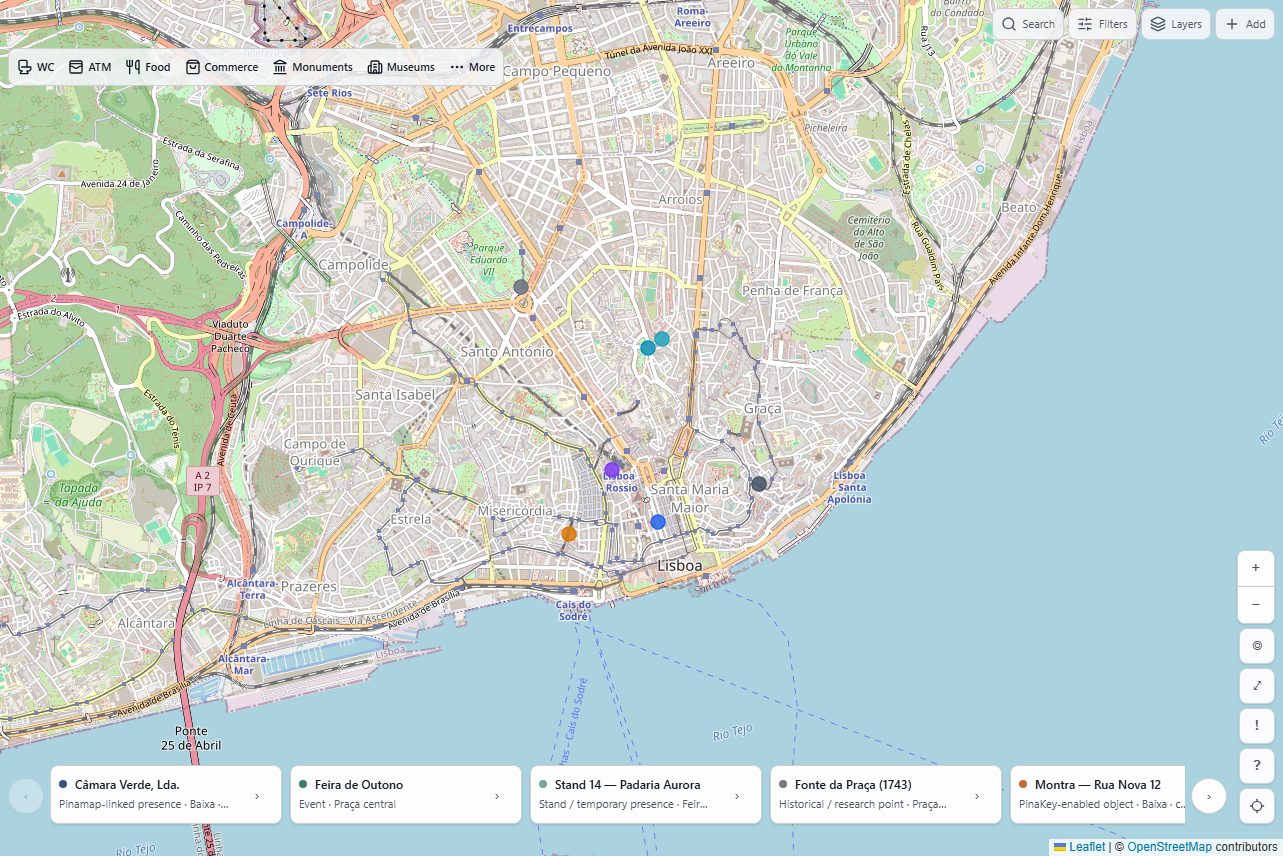
Find places and context on the territorial map — on foot, while driving, or from the Workspace.

Territory · Presence · Action
Pinamap connects people, places, knowledge, routes and services through territorial context. A place keeps its identity, the knowledge around it and the next action on the same map. Open the Workspace to see what is live.
The map and the Workspace are open to try. Some capabilities are still in development — see where Pinamap is today. The short demo sits on this page: watch it when you want. Guided Dale demo
What Pinamap is
Pinamap links physical places to persistent digital Presences. A place can be discovered, claimed, given context, researched and acted on — from the street or from the Workspace. People, places, knowledge and services that already exist meet in that territorial context. A heritage trail, a walk or a ride, and what is known about the landscape are applications of this platform.
How it works
Find places and context on the territorial map — on foot, while driving, or from the Workspace.
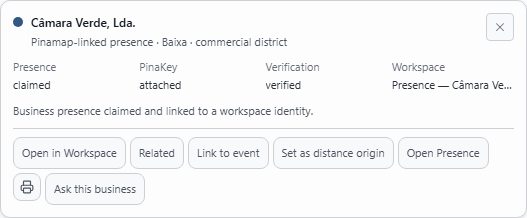
Request attribution for a place. A claim is reviewed and open to challenge — never instant ownership.
Link people, commerce, events and municipal context to the same Presence layer.
Move from public map to Workspace: supervision, investigation and coordinated action.
Who it is for
Local commerce, municipalities, events, and operator teams — plus people moving through the territory — all meet the same Presence model.
Be found territorially, claim a place, and connect physical entry with digital context and optional capabilities.
Steward territorial context, Presence claims and local activation on the shared map.
Anchor programming to real places on the map, with Presence and context.
Use the Workspace to supervise Presences, review claims and coordinate actions.
Read territorial context for research, site selection and real-estate decisions — connecting properties to the places, services and conditions around them.
A territorial context layer for better property decisions.
On the move: discovery follows you — walking, cycling or driving — so the map answers from where you actually are. Heritage, a trail and the knowledge around them belong to that same territory. In development Route optimisation and conversational discovery. Direction We aim to make an existing specialist service discoverable from the relevant place, while that service stays independent. People
Claim
A Presence can be claimed by the people responsible for the place. A claim is a request for attribution — it is reviewed, and it stays open to challenge.
If no valid objection is raised within 30 days, the attribution is confirmed. A claim that is successfully challenged does not stand.
Claim is in early access: claims are opened with us directly rather than from this page.
Workspace
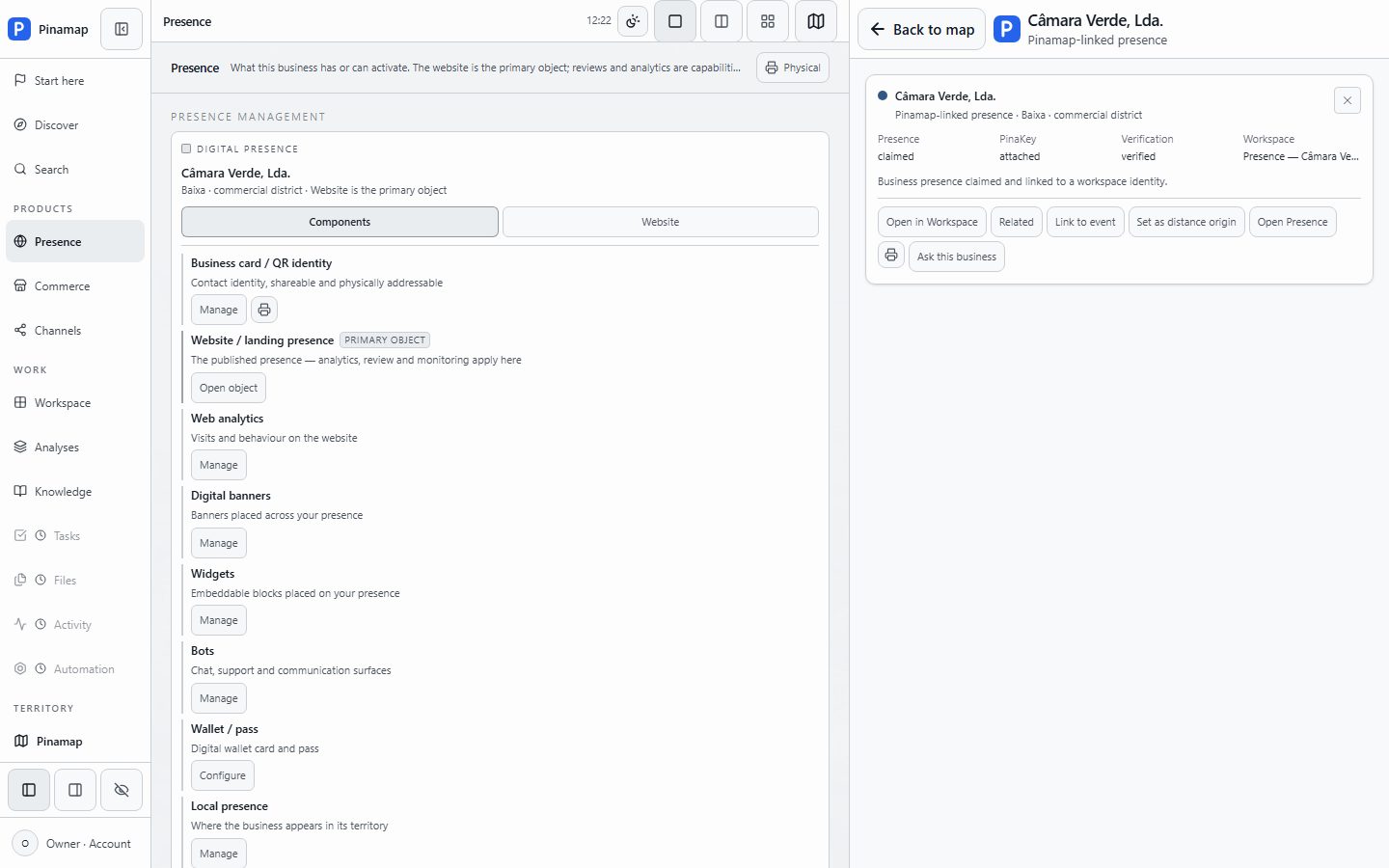
The public map explains territory. The Workspace is where you or your team supervise Presences, run investigations, read territorial context and take action — using the same product language as the live operator surface.
Field & Workspace
Pinamap is mobile-first, not mobile-only. The phone is where you meet the territory; the larger screen is where you work it. Neither is a reduced version of the other — they are built for different moments.
In the field
Built for movement, context and immediate decisions.
In the Workspace
Built for research, comparison and planning.
If you first meet Pinamap on a phone, you are seeing the field experience. The Workspace expands with the screen and with the context.
One situation
You are looking at Belém. Pastéis de Belém is a confectionery shop. The pastel de nata is the product it makes, not the shop itself. The Padrão dos Descobrimentos stands about 58 metres from Rosa dos Ventos, and they stay two places. Rosa dos Ventos is a landmark. Rosa, written alone, is the name of Pinamap’s future territorial assistant.
Open the Workspace and read the public map, Presences and the three Lisbon records on the platform page. The map can show a circuit projection for places you select. A private list copied from a route PDF can be entered as stops, and each stop is then placed on the map by hand.
Available now Map, Presence, Workspace and QR entry. The public Lisbon records
Lunch, a toilet, fuel or a charge depends on the service, the route, the time and how strong the evidence is. Live confirmation that a station is open, a charger is working, or an ATM accepts a deposit is in development.
In development Routes and conversational discovery. Decisions while moving
Rosa
Rosa is Pinamap’s specialised territorial interface, meant to connect what you are looking at with governed knowledge and a practical choice. Conversation and voice are in development.
The selected place, the visible map and, when you allow it, your location. We are developing the conversation that brings those together.
Identity, history, relationships and the difference between nearby and related. The public Lisbon records already keep that difference. Rosa is being developed to help you read them.
A next stop that matches the actual need. We are developing routes, live availability and the practical choice that follows.
Direction Google Maps, ChatGPT and specialist navigation can sit beside Pinamap. Each stays independent, and Pinamap aims to make the relevant one discoverable from the place. Rosa on the platform page
Current state
The territorial map and the Workspace are live to try. This page also shows what we are developing, and the direction we are building toward.
Demonstration content uses example places. The screenshots on this page are captured from the live product and show how a place opens. A guided Dale demo appears when a Pinamap demo address is configured. It is optional, it asks for no email, and this page stays available beside it.
In the field
Presence Pass
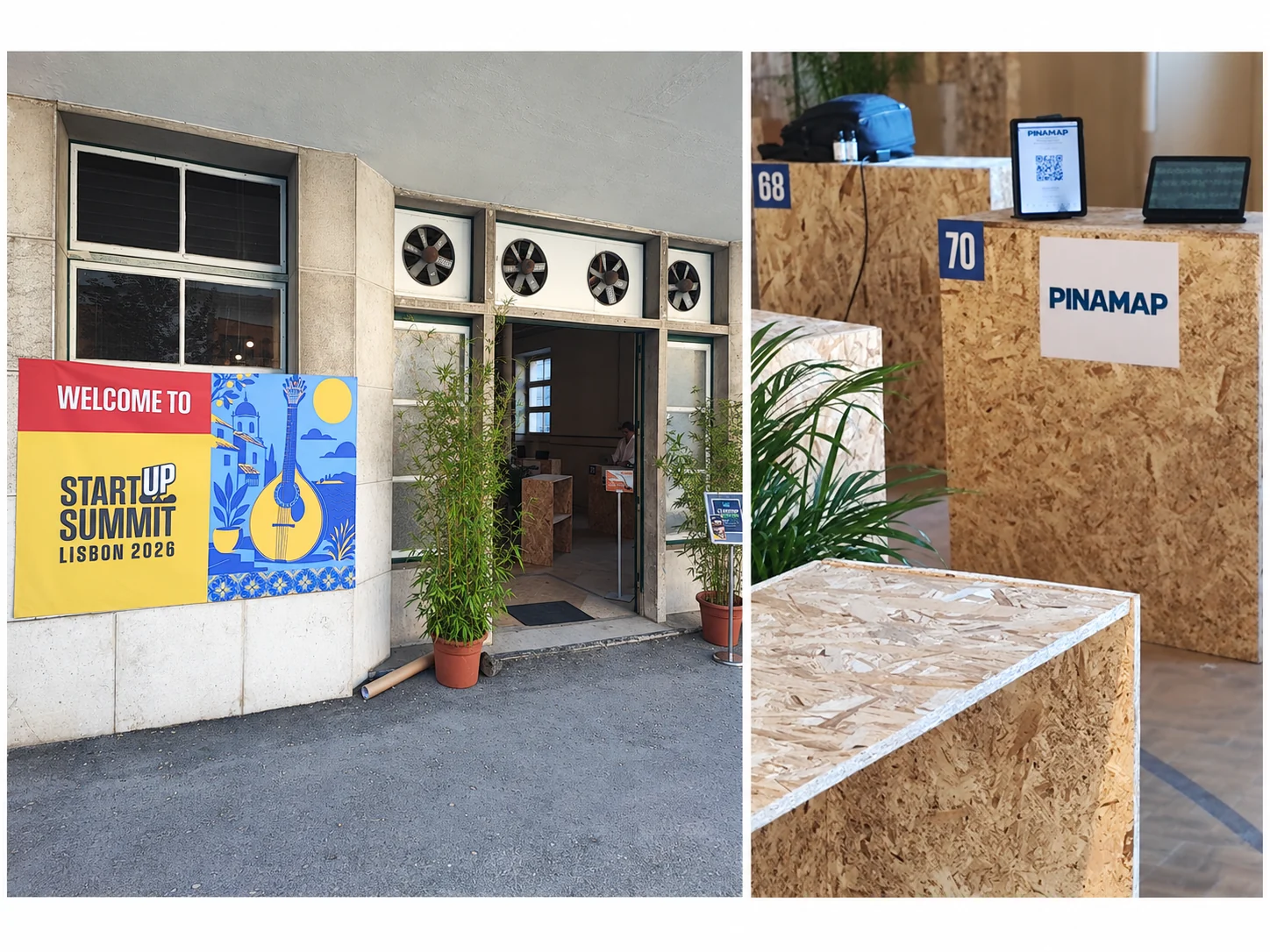
An optional portable expression of a Presence — physical and digital passes connected to your Pinamap Presence. Discovery on the map stays available on its own.
A simple card for one person or Presence.
Cards and digital identities for organisations and teams.
Opens an email to founder@pinamap.org — there is no sign-up form yet.
Capabilities
Start with Presence on the map. Discoverability comes first, and further capabilities can follow on the same place.
Capabilities can include territorial search, contextual discovery, conversational interaction, research and territorial intelligence, and location or property context.
Optional capabilities may include a shop or commerce experience, QR and NFC entry points, Presence Pass, campaigns and customer engagement. Commerce is activated on a Presence when you want it.
Protect your digital presence: web analysis, security checks, verification and monitoring may be activated on top of a Presence when needed.
A Presence can stay simple, or activate capabilities on top of it. Availability varies — see what is available now and what is still being built.
Infrastructure beneath the product
Pinamap is built on the Pinamap Runtime — a model-agnostic, application-agnostic engine designed to separate territorial intelligence, identity, presence and interaction from any single interface.
Pinamap is the first application built on the Runtime. Over time, the same engine can support federated Pinamap deployments, white-label implementations, partner-built applications and other products that use the same underlying territorial capabilities.
Federation and interoperability are design principles. The underlying capabilities are meant to be reusable across products, operators and contexts.
We are exploring an open-source path for parts of the Runtime, with federation as a core principle.
One runtime. Multiple applications. Interoperable by design.
Manifesto
Territory is the interface — physical and digital continuity, where a place can be discovered, claimed, carried and activated through Presence.
Movement and reflection need different surfaces. The street asks for immediacy; the Workspace asks for depth. Both are the same product.
Territorial infrastructure is meant to be shared, extended and operated through more than one application, so the territory stays understandable and accessible across operators.
A place becomes discoverable because it belongs to the territory.
Small local businesses can be found through Pinamap search, territorial context and participation. Basic presence stands on the place itself. Further capabilities can be added when they are useful.
The map stays grounded in place. Discovery comes from the territory.
Direction
What is open, what we are developing, and where we are heading.
Territorial map and discovery · Presence and context · Workspace supervision and investigation · QR entry points
Claim in early access · Presence Pass · routes and movement · conversational interaction with the territory · NFC entry points
Federated deployments on the Pinamap Runtime · expert agents · community validation · new territories
We will share timing as each capability is ready.
Open the Workspace to explore the map, or write to us about a place you are responsible for.